Friday, July 22, 2016

Book 189: The Structure of Scientific Revolutions

Reading Kuhn is important for understanding the rest of the sociology of science that follows, so it's something one must read if that's what they're studying. I found this text to be rather dry and tedious to read, so it is, perhaps, not the best book for someone looking to being to explore the field to read, but at the same time, maybe it is.

I think the major problem is, after 50 years the ideas of paradigm shifts and revolutions are so ingrained in the way that we study the history, philosophy, and sociology of science that it just doesn't seem that revolutionary anymore, and after becoming well versed in the history of since in the 18th, 19th, and 20th century the book just seems like a long series of name drops to support one position.

I will never cease to be amazed that Kuhn considers this 172 page book to be a mere essay.

It had no application to my thesis, but necessary to my thesis which is frustrating.I give it an 8 out of 10. 


A photo posted by Colleen Earle (@unphilosophise) on

Thursday, July 21, 2016

Book 188: Are We All Scientific Experts Now?

I found this book to be a good review and refresher of Collins' other books that's very accessible.

The answer was a little obvious. We're all experts but we're not all scientific experts. Collins seems to put the scientist on a moral pedestal, assuming that scientist  have to be, and in most cases are, more moral than the layman; a claim I believe to not have enough evidence to support it.

That being said, one could probably write several books on that topic.  Collins engages on a good discussion of both climategate and the MMR vaccine debates.

I give this book an 8 out of 10. This would be a good books to read to refresh yourself on Collins other works or gain a base knowledge of expertise.

A photo posted by Colleen Earle (@unphilosophise) on

Wednesday, July 20, 2016

Book 187: Making Natural Knowledge: Constructivism and the History of Science

This was a book that my thesis class read together. Due to its subject it went along well with the rest of my thesis research which turn out to be more about the sociology of science than anything else.

I found that this book flowed really well and was easy to read. It's a good book for anyone who studies the history of science to read.

I give it a 7 out of 10.

A photo posted by Colleen Earle (@unphilosophise) on

Tuesday, July 19, 2016

Book 186: The Prince of Homburg

To be honest I don't remember a whole lot about this book. I read this for a class two years ago and was quite sick at the time.

One of the points of the play that my prof highlighted was its focus on what good justice really is, like many of the other plays that I have read for class. I found that this question of justice was completely unanswered. It was all a lot to go through to assure loyalty.

I give this play a 5 out of 10. It was fairly enjoyable to read; most likely better in the German and performed as a play. 


Monday, July 18, 2016

Book 185: Master Mind: The Rise and Fall of Fritz Haber

I have many strong feelings about the historical figure that is Fritz Haber.

Admittedly, I had read this biography as the first step in a lengthy research project that will consumed about a third of my time in the second semester of last year (the other two-thirds of my time were my thesis. yaaaay). I was spurred to study this often forgotten scientist after hearing the rumour that this book does not put much stock in; that Haber's wife, Clara Immerwahr, the first women to receive a doctorate in chemistry from the university of Breslau, committed suicide because of Fritz's efforts during World War One to create a variety of poisonous gases, which is a very compelling story.

This biography is beautifully written. I highly recommend it to anyone who has an interest in chemistry at the turn of the century, or the condition of German science and the German people during the First World War.  Fritz Habar is considered a war criminal in some circles and just a good scientist in others. Today in our more modern age can stand to learn much from the ethical conundrum that Fritz found himself in as a scientist for the majority of his adult life.

I give this book a 10 out of 10. It was really fantastically written and has a good list of sources that it used. Unfortunately it's harder to find information on Fritz Haber, my own research for the paper I wrote relied heavily on this book and one written by Haber's son. Many people want to forget that Haber existed even though he was the first to synthesise nitrogen of fertilisers; without which we could not have industrial farming. This is a good book for anyone who is interested in World War One from a more German perspective to read.

A photo posted by Colleen Earle (@unphilosophise) on

Sunday, July 17, 2016

Book 184: Perfume: The Story of a Murderer

I remember back in high school this was a required reading for the I.B. students. Although I wasn't in I.B. most of my friends were and they complained about this novel a lot. Although I agree that this book was a bit more than just a bit weird and a tad bit disturbing, it definitely did not deserve all of the critiques they gave it.

Admittedly some parts of the book I found difficult to read, but I feel strongly that that should be the case whenever you're reading about murder and nefarious deeds. That being said I still find that it was a pretty quick read and pretty engrossing. I give it a seven out of ten. Not the best book ever but I don't feel any worse for having read it.


Saturday, July 16, 2016

Book 183: Shouldn't You Be In School?

Ah yes, the third book. As you all well know I am a huge fan of Snicket and his writing and I did really enjoy reading this book. Like most of his other novels I found that it flowed fast and kept you guessing for the majority of the novel. With his witty insights and cool quotations it's a fun read for someone of any age.

That being said the struggle of the third book is very real. After having firmly established the characters and setting up the end of a series always does weird things to a novel. The suspense is at it's peek, but there always seems like there's something missing from the novel, like the suspense is missing something else to it.

Regardless of my thoughts on the third-bookishness of this novel I still really enjoyed reading it. It makes a nice change from more serious novels and philosophy books. I give it a solid 9 out of 10.


Friday, July 15, 2016

Book 182: Cat's Cradle

This is definitely my favourite book that I've read by Vonnegut so far. I found the ending a little weird, but also fairly reminiscent of the Time Machine in its style.

It has been a long time since I've read but I have strong memories of Vonnegut's peculiar style and his gift for story telling and writing descriptions.

I give this book an 8 out of 10. It's definitely a good book to start with if you're looking into getting into Vonnegut.


Thursday, July 14, 2016

Book 181: Pilgrim at Tinker Creek

This book combines a deep view of nature and biology and meditation. Dillard's skill for observation are unparalleled and her attention to detail is something to strive for.

I really enjoyed this book. It made me see the world in a different light. I give it a 9 out of 10 and recommend it to everyone.


Wednesday, July 13, 2016

Book 180: Critique of Judgement

I read this book fruitlessly for my thesis. I enjoyed the botany jokes and the reflections on what beauty really is.

It's a large book but easier than most of Kant's other works to read.

Seeing that I've not read it in a while I don't want to say too much more. I always love reading some Kant. I give this book an 8 out of 10.


Tuesday, July 12, 2016

Book 179: Remarks on Colour

Even after weeks of reflection and writing a paper on it, I'm not sure I understand why Wittgenstein wants green to be a primary colour. 

This was not the hardest thing Wittgenstein wrote to read, but it was still a bit of a slog at times. I feel like I'm a better person now that I've done it. Colour is an interesting thing. I give this book a 5 out of 10. Definitely an interesting topic. 

Monday, July 11, 2016

Book 178: Scientific Thinking

Science triumphalism is the enemy and this book had no shortage of it. 

Martin writes in an extremely accessible fashion, which is great. Unfortunately all of his examples are awful and misrepresent the history of science. 

If you're only looking for a brief outline of the problems in scientific reasoning this is a good place to start, but take everything said in the book with a grain of salt. 

This book was assigned by a logic of science class. I give this book a 5 out of 10.


Sunday, July 10, 2016

Book 177: The Republic

This is the last books that I'm reviewing that I read for my Political Thought class.

Like the Oresteia, this is the second time that I've read this book and the second time I'm reviewing it. This first time was for FYP.

The republic is a book that all liberal arts students need to read at some point during their university career. It's not a bad book and has a lot of important ideas in it, but I've never particularly enjoyed reading it. It really helps one to figure out what their idea of justice is.

I give it a 7 out of 10. It's a good thing to read but not necessarily something that's enjoyable.

Saturday, July 9, 2016

Book 176: The Birds

Yet another book that I read for my political thought class.

I still don't really know what to think of this play. Unlike the other plays I've recently read, I have seen this one preformed, which only adds to my confusion. Hopefully class will make my feelings for it more clear.

I neither like nor dislike the play. I give this play a 6 out of 10.

Friday, July 8, 2016

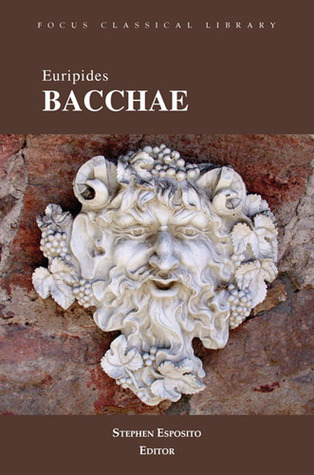
Book 175: Bacchae

Yet again, another day, another book that I read for my political thought class.

Unlike Antigone, I have seen bits of the Bacchae. Still, the problem of plays not being meant to be read but seen or acted persists in my reading of this play for class.

Admittedly, I did enjoy the Bacchae more than Antigone. I think this mostly stems from it being a lighter play with the occasional joke instead of the soul crushing that is Antigone.


The Bacchae treads more lightly around the idea of justice and how it is to be brought about than either Antigone or the Orestia did. Still, the whole line was dissolved so justice was achieved.


I give this play a 7 out of 10. A good read, regardless of my lack of seeing it.


Thursday, July 7, 2016

Book 174: Antigone

This was another book the tI read for my political thought class. For the most part I firmly believe that plays are meant to be seen and not read. There is something very different about watching a play compared to reading.

I feel like what I lacked in the visual department has caused me not to appreciate this play as it should be. I enjoyed reading the play, though it was short, but I still believe I missed out on some of the subtleties because of the reading. I found that it was a good reflection on bad justice.

I give this play a 5 out of 10. Not one of the best plays I've ever read but not bad.


Wednesday, July 6, 2016

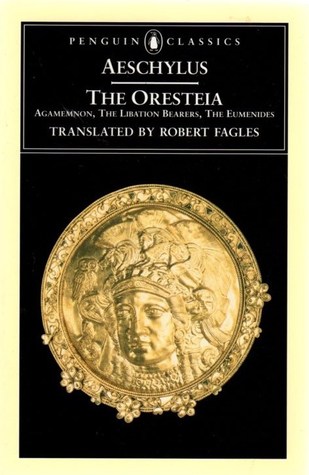
Book 173: The Oresteia

.......AAAAANNNNNND we're back! Sorry for the long wait folks. We're going back two years and then working towards today. There are lots of great books so hope you follow along with me!

This is the second review I've written for the Oresteia. I read it for the first time back in FYP now 5 years ago, when I read it for the second time four years ago for my thought on ancient political thought.

The Oresteia has always been one of my favourite Greek plays for many reasons. It has a wonderful treatment of justice. Libation Bearers is still my favourite of the trilogy.

I give this book 8 out of 10. It's always an amusing read.