I rate this book 8 out of 10. Llyod is nothing if not consistent.
I read a lot. Not as much as I used to, but it's still a lot. Lately I've been unmotivated to read so I started this blog to mark my progress through the books I've collected over the past five or six years.
Thursday, December 19, 2013
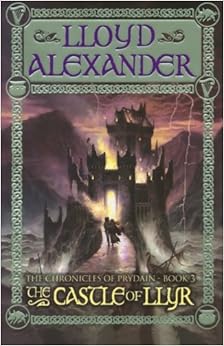
Book 147: The Castle of Llyre
I rate this book 8 out of 10. Llyod is nothing if not consistent.
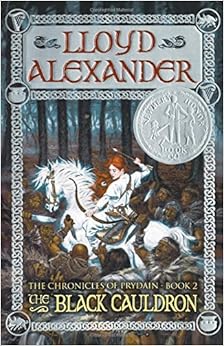
Book 146: The Black Cauldron
As with most series, as it progresses the complexity increases. The Black Cauldron picks up where the last book left off with an even more difficult problem.
*****SPOILERS*****
So, it's been a few months since I read this book, so I can't review it without talking about specific plot points. The were trying to steal the Black Cauldron to stop the productions of the army's of the undead. It was difficult. I really forget everything about this book.
*****SPOILERS******
That being said, I do like it. I give it 8 out of 10. I just really love Lloyd Alexander's writing style.
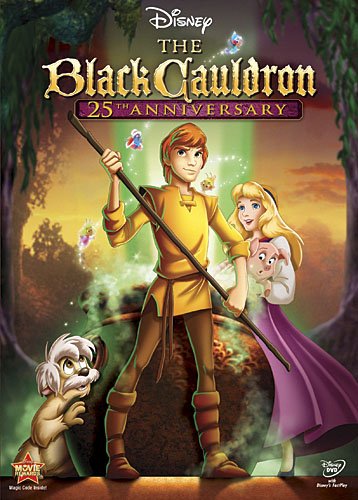
UPDATE: DID ANYONE KNOW THAT THIS WAS MADE INTO A MOVIE BECAUSE I DIDN'T (15.06.15)
*****SPOILERS*****
So, it's been a few months since I read this book, so I can't review it without talking about specific plot points. The were trying to steal the Black Cauldron to stop the productions of the army's of the undead. It was difficult. I really forget everything about this book.
*****SPOILERS******
That being said, I do like it. I give it 8 out of 10. I just really love Lloyd Alexander's writing style.
UPDATE: DID ANYONE KNOW THAT THIS WAS MADE INTO A MOVIE BECAUSE I DIDN'T (15.06.15)
Book 145: The Woodcutter
I have a lot of feelings about this book and they're all very complicated. I really love the premise of the book, how all the fairy tales and smashed up together and get to interact with each other. I feel like it had a lot of promise.
I read this with one of my friends, and we both feel very similarly about it. We love the plot and the idea, but found the writing a little odd and the ending a little taxing. As we know, I'm not a fan of happy endings, and in my humble opinion, this ending was far too happy. I would have liked to see the woodcutter die. What about the villains? and the magic? So many things in this book were questionable.
That being said, I still enjoyed reading it. I rate it 8 out of 10. It could be improved upon, but it was still a delightful short read.
I read this with one of my friends, and we both feel very similarly about it. We love the plot and the idea, but found the writing a little odd and the ending a little taxing. As we know, I'm not a fan of happy endings, and in my humble opinion, this ending was far too happy. I would have liked to see the woodcutter die. What about the villains? and the magic? So many things in this book were questionable.
That being said, I still enjoyed reading it. I rate it 8 out of 10. It could be improved upon, but it was still a delightful short read.
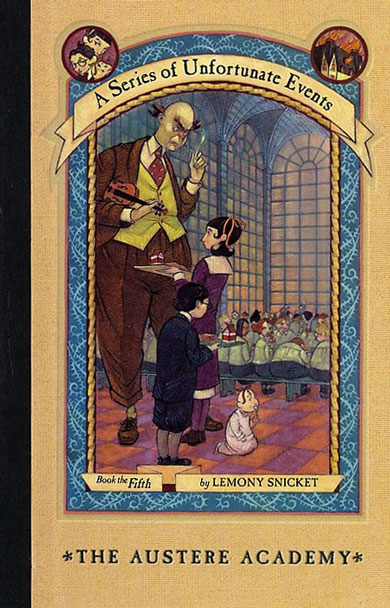
Book 144: The Austere Academy
If I didn't know better I'd say that Nero is Olaf. What a terrible man. He annoys me. I'd also like to know where the actual principle is.
I'm glad that the Baudelaires have found some friends. cakesniffers is the best insult I've ever read.
FUN FACT: On page 45 when the Baudelaires meet the Quagmire's, when Isadora says that she likes to write poetry Sunny replies "Sappho!" (Which means "I'd be very pleased to hear a poem of yours"). Interestingly enough, Sappho was an ancient Greek poetess, from the Island of Lesbos, often remarked upon for her many erotic poems! ~history!~ I was so excited when I found that one! I giggled so much. I think that's part of what makes Mr. Snicket's writing so brilliant.
I feel rather stupid that it's taken me so long to figure out that Beatrice is a reference to Dante. I'm so disappointed in myself, but I'm excited for the references.
The ending of this novel was so disappointing. It all looked so promising, and although I had my doubts that the Baudelaire's teacher were good people, they proved that they alone had the children's best interests at heart out of all the adults. I really hated the fact that Mr. Poe was there to give Nero candy and jewelry to that cakesniffer. That part cut me deep. I liked that Poe seemed a little more open to Olaf this time, though. Slightly. The triplet's situation grieves me deeply, though Mr. Snicket's promise that the Baudelaires will see them again gives me some hope for their situation. .
I rate this book 9 out of 10. It was far better than the last book in this series. More intrigue and more plot. I'm fairly impressed.
I'm glad that the Baudelaires have found some friends. cakesniffers is the best insult I've ever read.
FUN FACT: On page 45 when the Baudelaires meet the Quagmire's, when Isadora says that she likes to write poetry Sunny replies "Sappho!" (Which means "I'd be very pleased to hear a poem of yours"). Interestingly enough, Sappho was an ancient Greek poetess, from the Island of Lesbos, often remarked upon for her many erotic poems! ~history!~ I was so excited when I found that one! I giggled so much. I think that's part of what makes Mr. Snicket's writing so brilliant.
I feel rather stupid that it's taken me so long to figure out that Beatrice is a reference to Dante. I'm so disappointed in myself, but I'm excited for the references.
The ending of this novel was so disappointing. It all looked so promising, and although I had my doubts that the Baudelaire's teacher were good people, they proved that they alone had the children's best interests at heart out of all the adults. I really hated the fact that Mr. Poe was there to give Nero candy and jewelry to that cakesniffer. That part cut me deep. I liked that Poe seemed a little more open to Olaf this time, though. Slightly. The triplet's situation grieves me deeply, though Mr. Snicket's promise that the Baudelaires will see them again gives me some hope for their situation. .
I rate this book 9 out of 10. It was far better than the last book in this series. More intrigue and more plot. I'm fairly impressed.
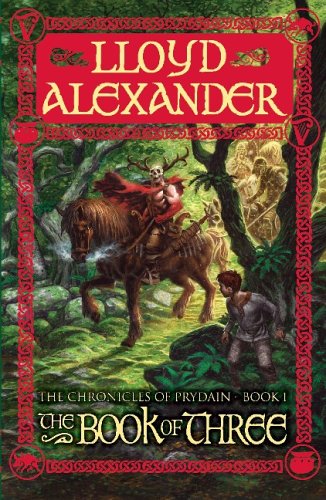
Book 143: The Book of Three
The book of three is a starting point. It sets up the rest of the series. But it sets it up with humour. The whole series is a good commentary on the balance of good and evil and how we define both in our society.
Lloyd Alexander weaves a captivating epic that starts as the search for a lost pig, meeting along the way many interesting characters and cruel villains.
I rate this book 8 out of 10. It wasn't quite as good as I remember it being when I was 15, but still captivating.
Book 142: Inferno
Okay, so I know Dan Brown isn't the best author, but boy do I get drawn in to his books. After studying Dante two years ago, I really enjoyed all the illusions to him as well as all the references.
As always, I found Mr. Brown's plot predictable. I enjoyed that he made it a little more taxing this time with the amnesia. That was really a game changer.
Let's talk about the premise of the book for a minute though. I found it really interesting that he was writing on the problem of over population. In the other books that I've read there may have been some thinly veiled social commentary, but Mr. Brown left this one out in the open and voiced some very strong opinions about World Health and how they are treating the problem.
*****SPOILERS*****
As always, I am impressed with the use of pseudo science in the book. Although we are probably capable of this at this point, it is still not something that we advertise in the science community. For those of you who know me well, you would know that I am a huge fan of the television series Fringe, so naturally having this airborne, DNA altering virus was stimulating, to say the least.
*****SPOILERS*****
I rate this book 6 out of 10. No matter how interesting and stimulating I found this book, the writing lacked something to be desired and the plot was a little too predictable. Fans of Dan Brown will not be disappointed, but those of you who dislike him aught to stay away.
As always, I found Mr. Brown's plot predictable. I enjoyed that he made it a little more taxing this time with the amnesia. That was really a game changer.
Let's talk about the premise of the book for a minute though. I found it really interesting that he was writing on the problem of over population. In the other books that I've read there may have been some thinly veiled social commentary, but Mr. Brown left this one out in the open and voiced some very strong opinions about World Health and how they are treating the problem.
*****SPOILERS*****
As always, I am impressed with the use of pseudo science in the book. Although we are probably capable of this at this point, it is still not something that we advertise in the science community. For those of you who know me well, you would know that I am a huge fan of the television series Fringe, so naturally having this airborne, DNA altering virus was stimulating, to say the least.
*****SPOILERS*****
I rate this book 6 out of 10. No matter how interesting and stimulating I found this book, the writing lacked something to be desired and the plot was a little too predictable. Fans of Dan Brown will not be disappointed, but those of you who dislike him aught to stay away.
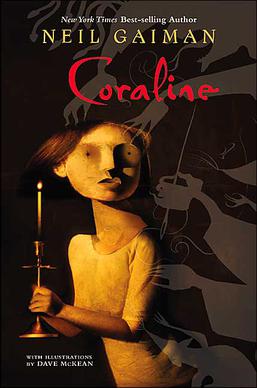
Book 141: Coraline
I'm still a little iffy about this book. The library has a "scarey" sticker on the spine. I don't do scarey.
I really love the cat, so far he's been the most enjoyable character. He's so sassy. He reminds me a lot of Cat in Little Bear. I think the eccentric old women in the flat downstairs are top notch too, though. While reading it, I felt really bad for the ghost children trapped in the closet by the Other Mother. I found the other father really sad though. It broke my heart a little. I also find it interesting how scared and weak cat got when he found out that he couldn't come and go as he pleased. It was so cat like.
I find that you can tell the age demographic really easily. The foreshadowing is really obvious and I feel like Gaiman simplified his writing style a lot and added way more words then I feel he might have used otherwise.
I found the climax of this novel rather disappointing. The scariest part, much to my own prediction, was in the last section either with the other-father or the Mr. Bobo in the attic. I found the bit with the hand taxing and boring. The defeat was anti-climatic. The only interesting thing to come out of it was the word from Mr. Bobo's mice.
All in all, a rather disappointing end too a mediocre book. I rate it 5 out of 10
I really love the cat, so far he's been the most enjoyable character. He's so sassy. He reminds me a lot of Cat in Little Bear. I think the eccentric old women in the flat downstairs are top notch too, though. While reading it, I felt really bad for the ghost children trapped in the closet by the Other Mother. I found the other father really sad though. It broke my heart a little. I also find it interesting how scared and weak cat got when he found out that he couldn't come and go as he pleased. It was so cat like.
I find that you can tell the age demographic really easily. The foreshadowing is really obvious and I feel like Gaiman simplified his writing style a lot and added way more words then I feel he might have used otherwise.
I found the climax of this novel rather disappointing. The scariest part, much to my own prediction, was in the last section either with the other-father or the Mr. Bobo in the attic. I found the bit with the hand taxing and boring. The defeat was anti-climatic. The only interesting thing to come out of it was the word from Mr. Bobo's mice.
All in all, a rather disappointing end too a mediocre book. I rate it 5 out of 10
Book 140: The Miserable Mill
After having done quite a bit of work in factories myself, I feel I
can tell you a little about how horrible it really is. Although Mr.
Snicket does a wonderful job at describing how terrible it is working
with breaks that shortness linger on illegality and how tiring the work
is, until you experience life on a bell similar to one you would have
had in your grade school, surrounded by people who have many years on
you who hate their job with more ferocity than you could imagine, you
may have a hard time knowing how extremely terrible of a time the
Baudelaire orphans are having at the Miserable Mill.
This was the first Series of Unfortunate Events book I ever read and I had long ago forgotten the plot, so it was in some ways quite surprising to me. I found it hard to tell who Olaf was and for much of the book oscilated between the masked foreman and the eye doctor.
I found that the fact that Sunny was sword fighting with her teeth to be a little troubling, but other than that the conclusion of this book was really awesome. I found it really intriguing the way that Klaus and Violet switched roles in this novel; where Violet did the research while Klaus was hypnotizes and Klaus invented a fishing rod to save the day.
I rate this book a healthy 8 out of 10. Not the best and not the worst.
This was the first Series of Unfortunate Events book I ever read and I had long ago forgotten the plot, so it was in some ways quite surprising to me. I found it hard to tell who Olaf was and for much of the book oscilated between the masked foreman and the eye doctor.
I found that the fact that Sunny was sword fighting with her teeth to be a little troubling, but other than that the conclusion of this book was really awesome. I found it really intriguing the way that Klaus and Violet switched roles in this novel; where Violet did the research while Klaus was hypnotizes and Klaus invented a fishing rod to save the day.
I rate this book a healthy 8 out of 10. Not the best and not the worst.
Sunday, July 7, 2013
Book 139: Old Possum's Book of Practical Cats
When I ordered this book I did not know that these poems are featured in Cats. In fact, I've never seen Cats.
This is a very whimsical collection of poems about cats. I thourghly enjoyed it. I read it rather mindlessly though, so I haven't much to say about Old Possum's Book of Practical Cats.
This is another book that it somewhat hard to come across. To my knowledge, no current amazon sellers carry it. Indigo.ca does stock it, but only second hand. I give it 9 cats out of 10. The pictures were a welcome addition.
This is a very whimsical collection of poems about cats. I thourghly enjoyed it. I read it rather mindlessly though, so I haven't much to say about Old Possum's Book of Practical Cats.
This is another book that it somewhat hard to come across. To my knowledge, no current amazon sellers carry it. Indigo.ca does stock it, but only second hand. I give it 9 cats out of 10. The pictures were a welcome addition.
Book 138: Philosophy of Science
This was a fantastic philosophy book. It critizes both philosophy and science in a very accessible way.
Often times, we find philosophy and science in an argument over who is better or who is more important. Fulton J. Sheen emphasizes the fact that neither can exist without the other and that more often than not they work together.
I give this book 10 out of 10. It was extremely accessible, and conveyed it's ideas in a straight forward manner.
Unfortunately, I believe that this book is relatively hard to find, in fact there are no pictures and my own edition is not handy nor is it particularly attractive. I'll leave you with a picture of Dr. Sheen instead:
[If you're worried about the fact that he is a priest and has written many religious texts and how this may affect his view on the philosophy of science, you shouldn't. God rarely enters his text.]
Often times, we find philosophy and science in an argument over who is better or who is more important. Fulton J. Sheen emphasizes the fact that neither can exist without the other and that more often than not they work together.
I give this book 10 out of 10. It was extremely accessible, and conveyed it's ideas in a straight forward manner.
Unfortunately, I believe that this book is relatively hard to find, in fact there are no pictures and my own edition is not handy nor is it particularly attractive. I'll leave you with a picture of Dr. Sheen instead:
[If you're worried about the fact that he is a priest and has written many religious texts and how this may affect his view on the philosophy of science, you shouldn't. God rarely enters his text.]
Book 137: The Wide Window
As a guardian, Aunt Josephine annoys me. I feel bad for her, love her, and hate her all at the same time. I believe that she is a chilling example of why one should not let fear rule their lives.
As always, Mr. Snicket makes me feel for these three children. A mix of pity and sadness. Their situation always seems so hopeless. I'm glad to see that Mr. Poe is starting to make some progress in this book, though it wasn't much.
I had more to say about this book and hoe thoughtless Aunt Josephine is, but I've long forgotten it. I give this book 9 banana's out of 10.
As always, Mr. Snicket makes me feel for these three children. A mix of pity and sadness. Their situation always seems so hopeless. I'm glad to see that Mr. Poe is starting to make some progress in this book, though it wasn't much.
I had more to say about this book and hoe thoughtless Aunt Josephine is, but I've long forgotten it. I give this book 9 banana's out of 10.
Book 136: Cloud Atlas
To be honest, I've been procrastinating about writing this review since I've read the book, which, coincidentally, is the reason why I didn't start writing them again until a few weeks ago. I have so many conflicting feelings about this book, I don't even know where to begin.
I guess I'll start by saying that I don't know how to rate it, what to rate it, or if it deserves the title of "favourites" on my goodreads shelving. Cloud Atlas is, without a doubt, a masterpiece. But of what sort?
Please also note that I watched the movie long before reading the book, so I went into the whole experience with expectations. I will be referring to the movie frequently throughout my review and giving a deeper analysis of the book-to-movie translation and why I think it worked well.
Caution: The following contains spoilers
To continue on with this review, I'm going to speak on each section of the book. Starting, of course, with The Pacific Journal of Adam Ewing.
The Pacific Journal of Adam Ewing:
One of the problems that I found when reading and watching this part was that Adam is a softer character. I feel that, until the end, he blindly follows in his beliefs, and has expectations of the goodness in people which can't possibly be true. This annoyed me. However; on further reflection of these sections, they are quite remarkable and I find myself look back on them with a softness and love that I didn't believe my heart possessed.
I found the island that they visited quite interesting. In some ways it reminds me of the vague recollections I have of More's Utopia, though I can't speak on the legitimacy of these claims. I think that this period was a good place to start. The whole book speaks to the value of human life, which I will delve into greater depths later, and it is quite obvious when we talk about Slavery.
Also, although the doctor was evil, his separation of symbols is interesting.
Letters from Zedelghem
This is, by far, my least favourite part. I enjoyed the edition of the daughter, Eva, in the book as opposed to the movie. It gave the story more flow. I did not enjoy Robert's "infatuation" with her, if you can call it that.
Where to start with Robert Frobisher? First off, he is incredibly cruel, thoughtless, fleeting, self-absorbed, and an ego-manic. It is established that Rufus Sixsmith is his lover, yet he tells Rufus of his sexual encounters and infatuations without second thought. I always feel so bad for Rufus, because, especially later in the story, it become so clear that his feelings for Robert are much stronger than Robert's for him, which makes the story a little more tragic.
Although I love my brooding, hopeless romantic, starving artist, as much as the next person, I find Robert to be a poor example of this. I feel like he is not creating "Art for Art's Sake" [there's a word for that I can't remember] music as he wants, but creating art for the sake of reputation. Though he feels he disregards reputation as a disowned son, he constantly lies about it and tried to uphold a false good reputation with Ayrs.
Finally, I will talk about his suicide. I have found that some people think this is "romantic" that he may have "died for his art" or like the idea of suicide so romanticize his character and distort him to such a point that he becomes the hero of his story instead of the villain that I have cast him as. I find this the most frustrating. First, I find his statement that suicide takes great courage to be misleading. You will find no arguments here that pulling a trigger to end one's own life takes tremendous courage, but that is the only part of suicide that I find in any way courageous. I found that through his entire story Robert was searching for reasons to die, and this mentality should, in now way, be admired and it baffles me that some people do. Robert is, deep down, a weak character. Not weakly written, in fact I find that Mr. Mitchell writes him very well, but weak morally. This weakness is highlighted even more by having his story book ended by two stories that feature two quite morally strong characters. I feel like Robert just gives up because he can't have what he wants, like an infant throwing a temper tantrum because he cannot have a toy times ten. It bothers me even more that he knew Sixsmith was there and he still followed through with his plan to kill himself instead of reuniting with his friend and lover and working through his problems. I find that his greatest act of cowardice, because his whole novel is an act of cowardice, is the one that ends his letters.
I believe, in the deepest parts of my soul, that Mitchell is trying to tell us something important about the value of human life in this section. That we are each free to live our own lives under pretenses that we create but have to deal with the consequences of them. To live a false life brings the highest of consequences, death, caused by the greatests of guilt's.
Half-Lives: The First Luisa Rey Mystery
I find this section quickly becoming my favourite. I love Luisa Rey. I find her incredibly strong. I also immensely enjoy the science behind this section.
This section is going to be much shorter and I'm going to skip to the value of human life. Unlike in the following section the focus isn't as much on slavery or unfair working conditions expect for the brief view we get into the sweat shop while Luisa and Joe Napier and trying to escape from Bill Smoke, which is not the main focus of the story. The main focus is the building of a nuclear power plant that will most likely fail according to the Sixsmith report and kill a lot of people. I feel like this is calling the government and corporations into question and their responsibility to the lives of their electorates and paying customers. That when they receive only one report that says that x is dangerous and shouldn't be allowed to be developed further without more research and have five others that give it the go ahead, that they should halt the project, because even the smallest sliver of doubt it too much.
I did enjoy the fact that Luisa got to meet Sixsmith. It made the story transfer more complete in some ways.
The Ghastly Ordeal of Timothy Cavendish
The first time I watched the movie, I missed the connection between Timothy Cavendish and Luisa Rey. Now I wonder if it was Javier Gomez or Luisa who wrote the book, but feel like it's Javier. Also, when I first read it I found that it provided more comic relief, which it does slightly at the expensive of it's message.
Here we see the value of human life represented in a different way. The question has often been raised whether it is right to shut away the elderly in retirement homes and the cards are stacked high in both columns. Some homes can't care for aging family members to the extent that they need, other times the family member in question is a danger to themselves. The issue presented in this text is whether it's right to lock away functioning members of society because we don't want to deal with them and the issues with the so called "care-givers" not respecting this charges how they rightfully deserve and treating them as infants who can't comprehend their situation when it is well within their cognitive power. I forgot to mention it earlier, but along with the value of human life we're talking about the value of freedom.
An Orison of Sonmi~451
This is my favourite part of both the book and the movie. Sonmi~451 is easily my favourite character. She brings up many questions.
Not so long ago, a researcher was looking for a women to carry a neanderthal baby to term so that we could study it. This raised many questions of the ethics of it all, along with what rights the child would have. Would it go to school? Would it be treated as a human or an animal? Is it fair to bring this child into the world purely as an experiment? The story of Sonmi~451 brings up many of these same questions. Is a fabricant less than a human because it came from a womb tank? Should they be treated as less than second class because of this? Clearly, in the society that Sonmi lives in, the answer is yes. All the fabricants are treating in an appalling manner. This also reminds me a lot of Never Let Me Go [though I've only seen the movie and have yet to read the book]. I think that this is the main question that is preventing us from pursuing human cloning in our own society, over population aside.
What I love most about book Sonmi which they skip over in movie is her education. That was the part that I found most compelling about her. The fact that she read older texts that no one else had read in a long time giving her away was really fascinating.
Sloosha's Crossin' an' Ev'rythin' After
It is arguable that this is my favourite part of the book. I've read many complaints that this section is hard to understand because of the broken English that it is written in. The best advice I've read to this extent is to ignore it, let it flow, and don't think too hard about it. Your brain will make sense of it.
In this section we see aspects of all the sections before it combined. The earth is partly destroyed and the human race is failing, slavery is alive and well, and people are though of as subhumans.
I've started to write this on another day, so I'm going to draw this section to a close .
As a book-to-movie translation, this novel is special. I cannot tell if I like to book or the movie more. I feel like they compliment each other. The movie rounds out the ends of the stories, many of which end abruptly, and is really beautiful. The book is filled with social commentary and fills in the background of all the characters. Using them together give the reader and watched a fuller picture of Mr. Mitchell's world.
Earlier in the review I called this book a masterpiece, and I'd like to take a second to explain it. It is, by rights, a masterpiece. Mitchell uses many different dialects of English in his writing, writes full and complex characters, and weaves a story through time which is wholly connects. Each section looks back on the section before it and uses the lessons wrought in it to go forward with their story. it is an ingenious writing technique.
As I've said, I've had a hard time writing this book. I've decided to give it 8 atlases out of 10. I really do love this book, but my feelings are still so mixed that I don't feel like I can give it a higher rating at this time. I hope to reread it again in a few years and see if I have a better idea about it then. Cloud Atlas is a work of art, and I highly recommend it to any reader.
I guess I'll start by saying that I don't know how to rate it, what to rate it, or if it deserves the title of "favourites" on my goodreads shelving. Cloud Atlas is, without a doubt, a masterpiece. But of what sort?
Please also note that I watched the movie long before reading the book, so I went into the whole experience with expectations. I will be referring to the movie frequently throughout my review and giving a deeper analysis of the book-to-movie translation and why I think it worked well.
Caution: The following contains spoilers
To continue on with this review, I'm going to speak on each section of the book. Starting, of course, with The Pacific Journal of Adam Ewing.
The Pacific Journal of Adam Ewing:
One of the problems that I found when reading and watching this part was that Adam is a softer character. I feel that, until the end, he blindly follows in his beliefs, and has expectations of the goodness in people which can't possibly be true. This annoyed me. However; on further reflection of these sections, they are quite remarkable and I find myself look back on them with a softness and love that I didn't believe my heart possessed.
I found the island that they visited quite interesting. In some ways it reminds me of the vague recollections I have of More's Utopia, though I can't speak on the legitimacy of these claims. I think that this period was a good place to start. The whole book speaks to the value of human life, which I will delve into greater depths later, and it is quite obvious when we talk about Slavery.
Also, although the doctor was evil, his separation of symbols is interesting.
Letters from Zedelghem
This is, by far, my least favourite part. I enjoyed the edition of the daughter, Eva, in the book as opposed to the movie. It gave the story more flow. I did not enjoy Robert's "infatuation" with her, if you can call it that.
Where to start with Robert Frobisher? First off, he is incredibly cruel, thoughtless, fleeting, self-absorbed, and an ego-manic. It is established that Rufus Sixsmith is his lover, yet he tells Rufus of his sexual encounters and infatuations without second thought. I always feel so bad for Rufus, because, especially later in the story, it become so clear that his feelings for Robert are much stronger than Robert's for him, which makes the story a little more tragic.
Although I love my brooding, hopeless romantic, starving artist, as much as the next person, I find Robert to be a poor example of this. I feel like he is not creating "Art for Art's Sake" [there's a word for that I can't remember] music as he wants, but creating art for the sake of reputation. Though he feels he disregards reputation as a disowned son, he constantly lies about it and tried to uphold a false good reputation with Ayrs.
Finally, I will talk about his suicide. I have found that some people think this is "romantic" that he may have "died for his art" or like the idea of suicide so romanticize his character and distort him to such a point that he becomes the hero of his story instead of the villain that I have cast him as. I find this the most frustrating. First, I find his statement that suicide takes great courage to be misleading. You will find no arguments here that pulling a trigger to end one's own life takes tremendous courage, but that is the only part of suicide that I find in any way courageous. I found that through his entire story Robert was searching for reasons to die, and this mentality should, in now way, be admired and it baffles me that some people do. Robert is, deep down, a weak character. Not weakly written, in fact I find that Mr. Mitchell writes him very well, but weak morally. This weakness is highlighted even more by having his story book ended by two stories that feature two quite morally strong characters. I feel like Robert just gives up because he can't have what he wants, like an infant throwing a temper tantrum because he cannot have a toy times ten. It bothers me even more that he knew Sixsmith was there and he still followed through with his plan to kill himself instead of reuniting with his friend and lover and working through his problems. I find that his greatest act of cowardice, because his whole novel is an act of cowardice, is the one that ends his letters.
I believe, in the deepest parts of my soul, that Mitchell is trying to tell us something important about the value of human life in this section. That we are each free to live our own lives under pretenses that we create but have to deal with the consequences of them. To live a false life brings the highest of consequences, death, caused by the greatests of guilt's.
Half-Lives: The First Luisa Rey Mystery
I find this section quickly becoming my favourite. I love Luisa Rey. I find her incredibly strong. I also immensely enjoy the science behind this section.
This section is going to be much shorter and I'm going to skip to the value of human life. Unlike in the following section the focus isn't as much on slavery or unfair working conditions expect for the brief view we get into the sweat shop while Luisa and Joe Napier and trying to escape from Bill Smoke, which is not the main focus of the story. The main focus is the building of a nuclear power plant that will most likely fail according to the Sixsmith report and kill a lot of people. I feel like this is calling the government and corporations into question and their responsibility to the lives of their electorates and paying customers. That when they receive only one report that says that x is dangerous and shouldn't be allowed to be developed further without more research and have five others that give it the go ahead, that they should halt the project, because even the smallest sliver of doubt it too much.
I did enjoy the fact that Luisa got to meet Sixsmith. It made the story transfer more complete in some ways.
The Ghastly Ordeal of Timothy Cavendish
The first time I watched the movie, I missed the connection between Timothy Cavendish and Luisa Rey. Now I wonder if it was Javier Gomez or Luisa who wrote the book, but feel like it's Javier. Also, when I first read it I found that it provided more comic relief, which it does slightly at the expensive of it's message.
Here we see the value of human life represented in a different way. The question has often been raised whether it is right to shut away the elderly in retirement homes and the cards are stacked high in both columns. Some homes can't care for aging family members to the extent that they need, other times the family member in question is a danger to themselves. The issue presented in this text is whether it's right to lock away functioning members of society because we don't want to deal with them and the issues with the so called "care-givers" not respecting this charges how they rightfully deserve and treating them as infants who can't comprehend their situation when it is well within their cognitive power. I forgot to mention it earlier, but along with the value of human life we're talking about the value of freedom.
An Orison of Sonmi~451
This is my favourite part of both the book and the movie. Sonmi~451 is easily my favourite character. She brings up many questions.
Not so long ago, a researcher was looking for a women to carry a neanderthal baby to term so that we could study it. This raised many questions of the ethics of it all, along with what rights the child would have. Would it go to school? Would it be treated as a human or an animal? Is it fair to bring this child into the world purely as an experiment? The story of Sonmi~451 brings up many of these same questions. Is a fabricant less than a human because it came from a womb tank? Should they be treated as less than second class because of this? Clearly, in the society that Sonmi lives in, the answer is yes. All the fabricants are treating in an appalling manner. This also reminds me a lot of Never Let Me Go [though I've only seen the movie and have yet to read the book]. I think that this is the main question that is preventing us from pursuing human cloning in our own society, over population aside.
What I love most about book Sonmi which they skip over in movie is her education. That was the part that I found most compelling about her. The fact that she read older texts that no one else had read in a long time giving her away was really fascinating.
Sloosha's Crossin' an' Ev'rythin' After
It is arguable that this is my favourite part of the book. I've read many complaints that this section is hard to understand because of the broken English that it is written in. The best advice I've read to this extent is to ignore it, let it flow, and don't think too hard about it. Your brain will make sense of it.
In this section we see aspects of all the sections before it combined. The earth is partly destroyed and the human race is failing, slavery is alive and well, and people are though of as subhumans.
I've started to write this on another day, so I'm going to draw this section to a close .
As a book-to-movie translation, this novel is special. I cannot tell if I like to book or the movie more. I feel like they compliment each other. The movie rounds out the ends of the stories, many of which end abruptly, and is really beautiful. The book is filled with social commentary and fills in the background of all the characters. Using them together give the reader and watched a fuller picture of Mr. Mitchell's world.
Earlier in the review I called this book a masterpiece, and I'd like to take a second to explain it. It is, by rights, a masterpiece. Mitchell uses many different dialects of English in his writing, writes full and complex characters, and weaves a story through time which is wholly connects. Each section looks back on the section before it and uses the lessons wrought in it to go forward with their story. it is an ingenious writing technique.
As I've said, I've had a hard time writing this book. I've decided to give it 8 atlases out of 10. I really do love this book, but my feelings are still so mixed that I don't feel like I can give it a higher rating at this time. I hope to reread it again in a few years and see if I have a better idea about it then. Cloud Atlas is a work of art, and I highly recommend it to any reader.
Sunday, June 23, 2013
Book 135: A Natural History of Dragons: A Memoir by Lady Trent
Okay, so when I read this book I didn't know that it had only been published recently. I saw it on tumblr and thought that it was the coolest looking book ever. I really love natural history and nothing is cooler than dragons, so what could go wrong? Answer? Nothing.
I started it because I was looking for something to read while I was waiting for the sims to load and it was close at hand. I didn't end up playing the sims for long because the book kept calling to me.
The first few chapters are about her childhood and, if you'll excuse my language, she was a bit of a badass. Not only was she super smart and read philosophy, she explored her world and dissected things and was generally awesome.
Okay, enough spoilers! All I have left to say about plot/character development is that it's there and it's fantastic. The middle section is fantastic. The ending is bittersweet. Ugh! Such a fantastic book!
I really loved the writing style. The memoir really works well for the story. It really helps that the character of Lady Trent is super sassy and wonderful.
I give this book a 10/10. It's made my favourite shelf, which is a task by itself! I highly recommend this book to anyone who likes fantasy and dragons, obviously, but also anyone who's interested in intellectual pursuits. As contradictory as it might sound to some who abhor fantasy and sci-fi and think of it as unintellectual, although you're just wrong, in this case you're far wrong. The way that Marie Brennan wrote the novel, it won't disappoint you.
I started it because I was looking for something to read while I was waiting for the sims to load and it was close at hand. I didn't end up playing the sims for long because the book kept calling to me.
The first few chapters are about her childhood and, if you'll excuse my language, she was a bit of a badass. Not only was she super smart and read philosophy, she explored her world and dissected things and was generally awesome.
Okay, enough spoilers! All I have left to say about plot/character development is that it's there and it's fantastic. The middle section is fantastic. The ending is bittersweet. Ugh! Such a fantastic book!
I really loved the writing style. The memoir really works well for the story. It really helps that the character of Lady Trent is super sassy and wonderful.
I give this book a 10/10. It's made my favourite shelf, which is a task by itself! I highly recommend this book to anyone who likes fantasy and dragons, obviously, but also anyone who's interested in intellectual pursuits. As contradictory as it might sound to some who abhor fantasy and sci-fi and think of it as unintellectual, although you're just wrong, in this case you're far wrong. The way that Marie Brennan wrote the novel, it won't disappoint you.
Book 134: The Reptile Room
Just a warning, I'm going to start a lot my review for A Series of Unfortunate Event with "character _______ was my favourite and I'm so sad that they're dead". Also, that I'm not going to stagger my catch up posts because I can't be bothered and I think I'm less likely to write my next review if I have things queued.
I feel like I can honestly, or not so honestly as the case may be, say that Uncle Monty is one of my favourite guardians of the Baudelaire children. He seems to genuinely care about the well being of the Baudelaires and believe them when they say people are evil.
Again, in this novel, Mr. Poe plays almost more of a villain than Count Olaf himself. His blindness towards the truth that the orphans say is discouraging to say the least and disturbing to say the most, especially in the later books.
The Reptile Room is one of my favourite novels in the series. I find that Uncle Monty is a particularly well rounded and well developed guardian, or at least more so than some of the other figures that appear in the books, like Justice Strauss and Mr. Poe who are both quite flat.
I give The Reptile Room 10/10. It's an excellent read and I highly recommend it!
I feel like I can honestly, or not so honestly as the case may be, say that Uncle Monty is one of my favourite guardians of the Baudelaire children. He seems to genuinely care about the well being of the Baudelaires and believe them when they say people are evil.
Again, in this novel, Mr. Poe plays almost more of a villain than Count Olaf himself. His blindness towards the truth that the orphans say is discouraging to say the least and disturbing to say the most, especially in the later books.
The Reptile Room is one of my favourite novels in the series. I find that Uncle Monty is a particularly well rounded and well developed guardian, or at least more so than some of the other figures that appear in the books, like Justice Strauss and Mr. Poe who are both quite flat.
I give The Reptile Room 10/10. It's an excellent read and I highly recommend it!
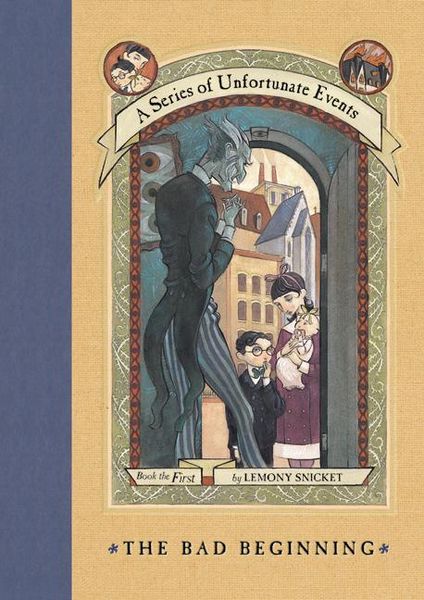
Book 133: The Bad Beginning
The Bad Beginning is a fantastic start to a fantastic series.
So I read this a month ago and as always it's a lot foggy now. Someday I'll be good at this.
I really love Klaus. He's always been my favourite Baudelaire because I feel like he's the most like me.
I really love how all three children always work together to solve their problems and will forever be heart broken that they don't get to live with Justice Strauss.
I give this book 10/10. It's still one of my favourites, after all the years that have gone by.
So I read this a month ago and as always it's a lot foggy now. Someday I'll be good at this.
I really love Klaus. He's always been my favourite Baudelaire because I feel like he's the most like me.
I really love how all three children always work together to solve their problems and will forever be heart broken that they don't get to live with Justice Strauss.
I give this book 10/10. It's still one of my favourites, after all the years that have gone by.
Thursday, May 16, 2013
Book 132: The Cosmic Perspective
This is the best text book I've ever read. I haven't read a lot of text books, but this is the best. It was insightful, witty, funny, and had a lot of fun fact. Without it I wouldn't be nearly as awesome as I am, true story. It also introduced me to the love of my life, Tycho Brahe, A Danish Astronomer who has his nose cut off in a duel over who was a better mathematician, had a pet moose who got drunk, fell down the stairs and died, screwed over Kepler, and died because his bladder got infected after it ruptured during a dinner with the King. What more do you want. It also alerted me to how awesome Kant is with his Nebular theory.
I love space and astronomy, it's always interested me. This text book presented the information in an interesting and accessible manner. The writing was top notch. I give it 10 protostars out of 10. If you ever have it assigned for a class, read it.
Wednesday, May 15, 2013
Book 131: Brave New World
I can't believe that this was the first time that I read this book. It's stunning. I really love the first half, the second half I can take it or leave it.
The introduction of John the Savage was one of my favourite parts. His soul reflects my own in some ways. I found his relationship with his mother similar in some ways to the relationship portrayed in Sexing the Cherry by Jeanette Winterson. Huxley's running social commentary is fantastic. I really enjoyed the discussion of mortality in the book. It's very sad, though.
I give this book 10 tears out of 10. Super good.
The introduction of John the Savage was one of my favourite parts. His soul reflects my own in some ways. I found his relationship with his mother similar in some ways to the relationship portrayed in Sexing the Cherry by Jeanette Winterson. Huxley's running social commentary is fantastic. I really enjoyed the discussion of mortality in the book. It's very sad, though.
I give this book 10 tears out of 10. Super good.
Tuesday, May 14, 2013
Book 130: The Gestapo and German Society: Enforcing Racial Policy 1933-1945
DISCLAIMER: I READ THIS BOOK FOR A CLASS I WAS TAKING THIS SEMESTER AND IT MADE ME REALLY DEPRESSED FOR A MONTH.
I wrote a paper on it. It was a good paper. I'm going to copy and paste it and you can browse it at your convince. Note: The introduction is weak and I'm too lazy to edit it. You may skip to the end for my closing remarks if you wish.
Robert Gellately book The Gestapo and German Society: Enforcing Racial Policy 1933-1945, explores the Gestapo’s role in German culture and enforcing racial policy during between 1933 and 1945. He starts with the basics functions of the Gestapo and expands into an in depth look at the role the Gestapo had in racial policy. Through an in depth look of how the Gestapo function within German society, one may discern how much involvement they have with racial policy.
In order to understand the Gestapo, one must first look at how it functioned internally. Today we recognize the Gestapo as a large spy ring, or secret police; that operated within Germany and its conquered territory during the Second World War, but it finds its roots in a state run police force. This was not uncommon in Germany, which “had a long tradition of police surveillance of political affairs” (Gellately, 21). The Gestapo formed in 1933, after the Nazis took over. Under the Nazis the “local branches across the country had built up considerable expertise and were by the beginning of 1933, sophisticated and highly professional” (21). Soon after Hitler’s appointment they became a nation political police force, prior to this time had been impossible. On the “26[th of] April 1933 by special law for the establishment of a Secret State Police Office (Gestapa)” (29), and with it the Gestapo took form.
Although the Gestapo worked within the framework of the National Socialist Party in Germany, they keep their identity partly separate. Heinrich Himmler, the leader of the Gestapo, had close ties with both the Nationalsozialistische Deutsche Arbeiter Partei (National Socialist German Work’s Party, or the Nazi Party), hereafter referred to as the NSDAP, and Hitler himself and was one of the major ties between the Gestapo as an organization and the NSDAP. Heydrich, however, did not share this affection for the NSDAP.
During the second chapter of Gellately’s book entitled Local Organization of Gestapo and Police, Gellately talks at length about Heinrich Müller. Müller was “born in Munich on 28 April 1900, the son of Catholic parents” (55). After World War I, where he, “as a flyer, earned decorations, among them the Iron Cross (1st Class)” (55), he joined the “Munich Metropolitan Police” (55), where he rose through the ranks quickly and later joined the “political police department, where he specialized in left-wing parties and groups” (55), so it made sense why he would be a good addition to the Gestapo. The NSDAP were not as enamoured by this decision as Himmler and Heydrich were, especially when “later (1939) [Müller] became head of the Gestapo under Himmler and held the position throughout the war-years” (55). At the time when Müller was first introduced into the Gestapo force in Munich, Himmler, “with the able assistance of Heydrich […] recruited 152 ‘well-trained’ persons from various levers of service and branches of the Munich police; […] some were in the Nazi party, but most were not” (55). The problem with these appointments and the appointments was that “when it came to selection of these officials, he took no political considerations into account” (56). Müller was not “a member of the NSDAP before 1933 – nor was he at the time of his political evaluation- and was no active in any of its affiliated organizations” (56). Because of this “the local party district headquarters recommended that Müller should not get the promotion […] in 1937, because he had done nothing of merit for the Nazi cause” (56); he did, however, receive the promotion “without party approval, in part because his chief Heydrich thought it an advantage not to have connections to the Party. Heydrich wanted to curtail the influences of the NSDAP almost from the day Hitler was appointed Chancellor” (56). By curbing the influence the NSDAP party has within the Gestapo, Heydrich and helps to explain some of their actions in relation to racial policy. Müller was not the only ranking member of the Gestapo that did not conform to party lines, Franz Josef Huber (56-57) also followed in this trend.
The Gestapo worked to gather information about the citizens through spy networks. There were various levels of spies, with variable credibility. The Gestapo relied heavily on population participation to work to its peak performance. Of course, this caused many problems with people ratting out their husbands, wives, and neighbours to be put in a more favourable position themselves. In the book Gellately discusses Walter Weyrauch`s discoveries in 1945 about the Frankfurt Gestapo, who has around 1, 200 paid informers at one time (62). Unfortunately “the Gestapo case-files are rare sources: they were destroyed nearly everywhere” (130), which makes this harder to prove with concrete evidence as explored by Gellately. Along with some records of paid informants, the Gestapo also use a method called “political denunciation” (132) to gain information about citizens who may or may not be suspect. These denunciations started 26% of the “initiation of a Proceeding with the Düsseldorf Gestapo. This was “key link in the three-way interaction between police, people and policy in Nazi Germany” (136), and without it the system wouldn’t work. Without neighbours, husbands, and wives denouncing their neighbours and loved ones, the Gestapo would not have any concrete reasons to investigate anyone and the NSDAP would not know if their policy was being effective. Of course, there was many problems with this system. Gellately cites many examples of couples accusing each other of going against NSDAP policy to better themselves; for example, “in order to obtain a favourable divorce settlement” (148). This “developed a kind of auto-policing, or at least an auto-surveillance system” (258) which greatly helped the Gestapo.
As the title suggests, a good portion of the book is spent on how the Gestapo helped to enforce racial policy. Gellately explores the repercussions of an Aryan German being involved in friendship and sexual relationship with both people of Polish decent and Jewish decent. This was considered both “race defilement” (160) and a “sin against blood” (232).
From ones knowledge about Nazi Germany, one would be aware of the fact that social mixing between the Jewish populous and the German populous was frowned upon, but as the first section of The Gestapo and German Society pointed out, the Western idea of what the Gestapo did in connection with the Jewish question isn’t always accurate. Gellately points out that the Gestapo did not play a leading role in enforcing racial and sexual policy, it was, in face, the public. The “’Gestapo’s own observations’, at least when it came to enforcing racial/sexual segregation [of the Jews and Germans] were responsible for initiating less than 1% of such cases” (162) whereas reports from the population accounted for 57% of the responsibility. This being said, during investigations 36% of all accusations of “Race defilement” and 45% of all accusations of “friendship to Jews” was “found to be baseless” (164, Table 4), so although there were many accusations from the public, many of them were false. The Gestapo did deal with theses, insofar as they were investigated, but after a claim was said to be true or false they had little more to do with it. A similar view was taken to racial policy in regards to the Polish workers, although Gellately does not provide statistics for cases reported and cases to be proven false.
Although there were punishments and repercussions were sever for race defilement involving the Germans and the Polish, they seemed to me more so with the Jews. Gellately gives several reasons for this indirectly. The Poles were brought into Germany as a supplement for their workforce. These was regarded as a “necessary evil” (250) and upon arriving to Germany the foreign workers were “explicitly made aware policies that had been designed to regulate their every move” (250), which puts them in a far different situation from the Jews, seeing that the Jew were already present. This, as far as racial policy goes, puts the Poles at a slight advantage because they are needed within the society.
Although, as the title suggests, this book is about racial policy, the way that Gellately deals with the way that the Gestapo approaches racial policy was overshadowed, in part, by his fantastic analysis of the way the Gestapo works generally. Not only does Gellately go into more depth about the everyday workings on the Gestapo, he also has more evidence to support it. As stated earlier, the chapter about the polish foreign workers, unlike that about the Jews, had no numerical evidence to support it. It did not go into as much depth about how much the Gestapo investigated these cases, how many were investigated and how many of them were proven to be true. Although both of these chapters were rich in case studies, they still did not have as many case studies as the chapter about political denunciation, making the writing in both of them weaker still. This, of course, is a biased view of the book. Reading about racial policy is hard and rather depressing, so the parts of the book that made it easier to ignore these functions of the Gestapo were easier to get through.
In addition, the opening chapters were far more engaging than the ones that followed. Gellately wrote these chapters in such a way that suggests that he may have more interest in the general workings of the Gestapo and its high ranking officers than the topic of the book. This is also where he brings up more of his in depth analysis of the Gestapo that he builds on in the following chapters.
The problem with any book on reads is who one would consider recommending it to. The obvious answer is always on who enjoys the subject matter, but as not many people enjoy reading length books about racial policy and how it was controlled, it is doubt that many people would want to jump at the opportunity to read this for pleasure. However, both the racial policy enacted by the NSDAP and the Gestapo are popular fields of study. The Gestapo and German Society: Enforcing Racial Policy 1933-1945 outlines both in a way that it is accessible and offers insight into the inner workings of the Gestapo that aren’t normally looks at in commentaries. It would also be very useful to any university student who was writing a paper on the subject, but was not as knowledgeable of it as other in the field might be. Although it gives a lot of facts in quick succession and expects one to know a lot of terms, the footnotes are very useful and comprehensive, along with the glossary, index and map. The books lay out is quite agreeable and builds on its first points up to its last, and as any bibliophile would agree, organization is key in a good book no matter what the topic
The Gestapo and German Society: Enforcing Racial Policy 1933-1945 by Robert Gellately is a well-organized book about the Gestapo and their role in enforcing the racial policy. The focus he puts on the general functioning of the Gestapo in the first section allows the reader to understand the later actions of the Gestapo with greater ease. Through exploring the roots of the Gestapo, Gellately accurately articulates the slight separation between the Gestapo and the NSDAP and why Heydrich wanted it to be that way. The stress Gellately puts on the fact that the Gestapo replied heavily on the support and tips from the general public makes them seem like a less intimidating organization than pop culture makes them out to be today. The Gestapo and German Society: Enforcing Racial Policy 1933-1945 allows the reader to easily reach the end goal of the book; to have a better understand of the Gestapo and its affects in racial policy.
Okay, if you read my essay, you know what I think. I found this book to be extremely depressing and would have rather it been written on the Gestapo minus the racial policy because the Gestapo was actually what I was interested in. That being said, this was a very well written book and it explores the Gestapo in an interesting and academic way. Despite the subject matter, I give this book 8.5 out of 10. I would not recommend this book for everyone. For further detail, please read my essay.
I wrote a paper on it. It was a good paper. I'm going to copy and paste it and you can browse it at your convince. Note: The introduction is weak and I'm too lazy to edit it. You may skip to the end for my closing remarks if you wish.
Robert Gellately book The Gestapo and German Society: Enforcing Racial Policy 1933-1945, explores the Gestapo’s role in German culture and enforcing racial policy during between 1933 and 1945. He starts with the basics functions of the Gestapo and expands into an in depth look at the role the Gestapo had in racial policy. Through an in depth look of how the Gestapo function within German society, one may discern how much involvement they have with racial policy.
In order to understand the Gestapo, one must first look at how it functioned internally. Today we recognize the Gestapo as a large spy ring, or secret police; that operated within Germany and its conquered territory during the Second World War, but it finds its roots in a state run police force. This was not uncommon in Germany, which “had a long tradition of police surveillance of political affairs” (Gellately, 21). The Gestapo formed in 1933, after the Nazis took over. Under the Nazis the “local branches across the country had built up considerable expertise and were by the beginning of 1933, sophisticated and highly professional” (21). Soon after Hitler’s appointment they became a nation political police force, prior to this time had been impossible. On the “26[th of] April 1933 by special law for the establishment of a Secret State Police Office (Gestapa)” (29), and with it the Gestapo took form.
Although the Gestapo worked within the framework of the National Socialist Party in Germany, they keep their identity partly separate. Heinrich Himmler, the leader of the Gestapo, had close ties with both the Nationalsozialistische Deutsche Arbeiter Partei (National Socialist German Work’s Party, or the Nazi Party), hereafter referred to as the NSDAP, and Hitler himself and was one of the major ties between the Gestapo as an organization and the NSDAP. Heydrich, however, did not share this affection for the NSDAP.
During the second chapter of Gellately’s book entitled Local Organization of Gestapo and Police, Gellately talks at length about Heinrich Müller. Müller was “born in Munich on 28 April 1900, the son of Catholic parents” (55). After World War I, where he, “as a flyer, earned decorations, among them the Iron Cross (1st Class)” (55), he joined the “Munich Metropolitan Police” (55), where he rose through the ranks quickly and later joined the “political police department, where he specialized in left-wing parties and groups” (55), so it made sense why he would be a good addition to the Gestapo. The NSDAP were not as enamoured by this decision as Himmler and Heydrich were, especially when “later (1939) [Müller] became head of the Gestapo under Himmler and held the position throughout the war-years” (55). At the time when Müller was first introduced into the Gestapo force in Munich, Himmler, “with the able assistance of Heydrich […] recruited 152 ‘well-trained’ persons from various levers of service and branches of the Munich police; […] some were in the Nazi party, but most were not” (55). The problem with these appointments and the appointments was that “when it came to selection of these officials, he took no political considerations into account” (56). Müller was not “a member of the NSDAP before 1933 – nor was he at the time of his political evaluation- and was no active in any of its affiliated organizations” (56). Because of this “the local party district headquarters recommended that Müller should not get the promotion […] in 1937, because he had done nothing of merit for the Nazi cause” (56); he did, however, receive the promotion “without party approval, in part because his chief Heydrich thought it an advantage not to have connections to the Party. Heydrich wanted to curtail the influences of the NSDAP almost from the day Hitler was appointed Chancellor” (56). By curbing the influence the NSDAP party has within the Gestapo, Heydrich and helps to explain some of their actions in relation to racial policy. Müller was not the only ranking member of the Gestapo that did not conform to party lines, Franz Josef Huber (56-57) also followed in this trend.
The Gestapo worked to gather information about the citizens through spy networks. There were various levels of spies, with variable credibility. The Gestapo relied heavily on population participation to work to its peak performance. Of course, this caused many problems with people ratting out their husbands, wives, and neighbours to be put in a more favourable position themselves. In the book Gellately discusses Walter Weyrauch`s discoveries in 1945 about the Frankfurt Gestapo, who has around 1, 200 paid informers at one time (62). Unfortunately “the Gestapo case-files are rare sources: they were destroyed nearly everywhere” (130), which makes this harder to prove with concrete evidence as explored by Gellately. Along with some records of paid informants, the Gestapo also use a method called “political denunciation” (132) to gain information about citizens who may or may not be suspect. These denunciations started 26% of the “initiation of a Proceeding with the Düsseldorf Gestapo. This was “key link in the three-way interaction between police, people and policy in Nazi Germany” (136), and without it the system wouldn’t work. Without neighbours, husbands, and wives denouncing their neighbours and loved ones, the Gestapo would not have any concrete reasons to investigate anyone and the NSDAP would not know if their policy was being effective. Of course, there was many problems with this system. Gellately cites many examples of couples accusing each other of going against NSDAP policy to better themselves; for example, “in order to obtain a favourable divorce settlement” (148). This “developed a kind of auto-policing, or at least an auto-surveillance system” (258) which greatly helped the Gestapo.
As the title suggests, a good portion of the book is spent on how the Gestapo helped to enforce racial policy. Gellately explores the repercussions of an Aryan German being involved in friendship and sexual relationship with both people of Polish decent and Jewish decent. This was considered both “race defilement” (160) and a “sin against blood” (232).
From ones knowledge about Nazi Germany, one would be aware of the fact that social mixing between the Jewish populous and the German populous was frowned upon, but as the first section of The Gestapo and German Society pointed out, the Western idea of what the Gestapo did in connection with the Jewish question isn’t always accurate. Gellately points out that the Gestapo did not play a leading role in enforcing racial and sexual policy, it was, in face, the public. The “’Gestapo’s own observations’, at least when it came to enforcing racial/sexual segregation [of the Jews and Germans] were responsible for initiating less than 1% of such cases” (162) whereas reports from the population accounted for 57% of the responsibility. This being said, during investigations 36% of all accusations of “Race defilement” and 45% of all accusations of “friendship to Jews” was “found to be baseless” (164, Table 4), so although there were many accusations from the public, many of them were false. The Gestapo did deal with theses, insofar as they were investigated, but after a claim was said to be true or false they had little more to do with it. A similar view was taken to racial policy in regards to the Polish workers, although Gellately does not provide statistics for cases reported and cases to be proven false.
Although there were punishments and repercussions were sever for race defilement involving the Germans and the Polish, they seemed to me more so with the Jews. Gellately gives several reasons for this indirectly. The Poles were brought into Germany as a supplement for their workforce. These was regarded as a “necessary evil” (250) and upon arriving to Germany the foreign workers were “explicitly made aware policies that had been designed to regulate their every move” (250), which puts them in a far different situation from the Jews, seeing that the Jew were already present. This, as far as racial policy goes, puts the Poles at a slight advantage because they are needed within the society.
Although, as the title suggests, this book is about racial policy, the way that Gellately deals with the way that the Gestapo approaches racial policy was overshadowed, in part, by his fantastic analysis of the way the Gestapo works generally. Not only does Gellately go into more depth about the everyday workings on the Gestapo, he also has more evidence to support it. As stated earlier, the chapter about the polish foreign workers, unlike that about the Jews, had no numerical evidence to support it. It did not go into as much depth about how much the Gestapo investigated these cases, how many were investigated and how many of them were proven to be true. Although both of these chapters were rich in case studies, they still did not have as many case studies as the chapter about political denunciation, making the writing in both of them weaker still. This, of course, is a biased view of the book. Reading about racial policy is hard and rather depressing, so the parts of the book that made it easier to ignore these functions of the Gestapo were easier to get through.
In addition, the opening chapters were far more engaging than the ones that followed. Gellately wrote these chapters in such a way that suggests that he may have more interest in the general workings of the Gestapo and its high ranking officers than the topic of the book. This is also where he brings up more of his in depth analysis of the Gestapo that he builds on in the following chapters.
The problem with any book on reads is who one would consider recommending it to. The obvious answer is always on who enjoys the subject matter, but as not many people enjoy reading length books about racial policy and how it was controlled, it is doubt that many people would want to jump at the opportunity to read this for pleasure. However, both the racial policy enacted by the NSDAP and the Gestapo are popular fields of study. The Gestapo and German Society: Enforcing Racial Policy 1933-1945 outlines both in a way that it is accessible and offers insight into the inner workings of the Gestapo that aren’t normally looks at in commentaries. It would also be very useful to any university student who was writing a paper on the subject, but was not as knowledgeable of it as other in the field might be. Although it gives a lot of facts in quick succession and expects one to know a lot of terms, the footnotes are very useful and comprehensive, along with the glossary, index and map. The books lay out is quite agreeable and builds on its first points up to its last, and as any bibliophile would agree, organization is key in a good book no matter what the topic
The Gestapo and German Society: Enforcing Racial Policy 1933-1945 by Robert Gellately is a well-organized book about the Gestapo and their role in enforcing the racial policy. The focus he puts on the general functioning of the Gestapo in the first section allows the reader to understand the later actions of the Gestapo with greater ease. Through exploring the roots of the Gestapo, Gellately accurately articulates the slight separation between the Gestapo and the NSDAP and why Heydrich wanted it to be that way. The stress Gellately puts on the fact that the Gestapo replied heavily on the support and tips from the general public makes them seem like a less intimidating organization than pop culture makes them out to be today. The Gestapo and German Society: Enforcing Racial Policy 1933-1945 allows the reader to easily reach the end goal of the book; to have a better understand of the Gestapo and its affects in racial policy.
Okay, if you read my essay, you know what I think. I found this book to be extremely depressing and would have rather it been written on the Gestapo minus the racial policy because the Gestapo was actually what I was interested in. That being said, this was a very well written book and it explores the Gestapo in an interesting and academic way. Despite the subject matter, I give this book 8.5 out of 10. I would not recommend this book for everyone. For further detail, please read my essay.
Monday, May 13, 2013
Book 129: The Sweet Far Thing
The Sweet Far Thing is the longest book in the Gemma Doyle Trilogy. It is worth every page.
A Great and Terrible Beauty is still my favourite book in the trilogy, but The Sweet Far Thing is fantastic. It is an emotional roller coaster in the best and the worst of ways. Gemma grows up, as do all the other characters. I can't even talk about this book, I'm getting way to emotional on the other side of this screen.
Let's skip to the rating!
I give this book 10/10. I love it. It's wonderful. It makes me cry a little [lot]. It presents rounded, developed characters with hard decisions. They suffer the consequences of those decisions. It's beautiful, and a "great" ending to the series. (If you've read it you know why great is in quotation marks, if not read it and find out why)
A Great and Terrible Beauty is still my favourite book in the trilogy, but The Sweet Far Thing is fantastic. It is an emotional roller coaster in the best and the worst of ways. Gemma grows up, as do all the other characters. I can't even talk about this book, I'm getting way to emotional on the other side of this screen.
Let's skip to the rating!
I give this book 10/10. I love it. It's wonderful. It makes me cry a little [lot]. It presents rounded, developed characters with hard decisions. They suffer the consequences of those decisions. It's beautiful, and a "great" ending to the series. (If you've read it you know why great is in quotation marks, if not read it and find out why)
Sunday, May 12, 2013
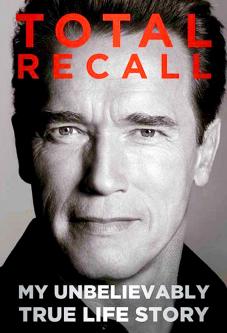
Book 128: Total Recall: My Unbelievably True Life Story
Okay, let me start off with saying that I had no idea about what happened between Arnold and Maria until the end of the book and I was crushed.
I starting reading it after Christmas and was completely taken by Arnold and thought he was a really good role model. I understand why my parents questioned my judgement now. I finished it over my February break and was completely torn up about Arnold's betrayal. It cut me deep.
Otherwise, it was a completely enjoyable book. Arnold has lived a really interesting life and I really enjoyed reading about it. It amazes me how driven he was and I feel like if I had half the drive he has I probably wouldn't be blogging about books so unsuccessfully.
I give this book a 8 out of 10. He was my hero, now he's a little too human. I'm still a fan though. It was a really good biography if that's what you like. Don't let the length scare you.
I starting reading it after Christmas and was completely taken by Arnold and thought he was a really good role model. I understand why my parents questioned my judgement now. I finished it over my February break and was completely torn up about Arnold's betrayal. It cut me deep.
Otherwise, it was a completely enjoyable book. Arnold has lived a really interesting life and I really enjoyed reading about it. It amazes me how driven he was and I feel like if I had half the drive he has I probably wouldn't be blogging about books so unsuccessfully.
I give this book a 8 out of 10. He was my hero, now he's a little too human. I'm still a fan though. It was a really good biography if that's what you like. Don't let the length scare you.
Saturday, May 11, 2013
Book 127: We
We has been my favourite book that I've read so far this year. I love dystopic fiction with a passion and thinly failed references to the USSR are always fun.
The characters in this book are so real. I really connected with O-90. I feel like we're much the same person. D-503 is also a really cool dude. I really love his hang up on the square root of -1. I think that it says a lot about his character and the society.
So, it's been a few months since I've actually read this book, so I don't have much more to say about it. It has a really special place in my heart. I give it 10 colours out of 10. It really is fantastic.
The characters in this book are so real. I really connected with O-90. I feel like we're much the same person. D-503 is also a really cool dude. I really love his hang up on the square root of -1. I think that it says a lot about his character and the society.
So, it's been a few months since I've actually read this book, so I don't have much more to say about it. It has a really special place in my heart. I give it 10 colours out of 10. It really is fantastic.
Monday, March 4, 2013
Book 126: A Strange Manuscript Found in a Copper Cylinder
"Horror is a feeling that cannot last long; human nature is incapable of supporting it. Sadness, whether it be from bereavement, or disappointment, or misfortune of any kind may linger on through life"
~ James De Mille
When I started reading A Strange Manuscript Found in a Copper Cylinder by James De Mille, I wasn't overly impressed. I had to read it for my Foundations of Science Fiction course, and I really did see how it fit into the course as a science fiction book. I'm still a little bitter that it was included in the course because I'm still not convinced that it belongs there, but it was a tragically beautiful book.
In the novel, four English man caught in a dead spot in the ocean and read a manuscript that they found in a copper cylinder about a sailor named Adam More, who is ship wrecked, or abandoned, on an island in the southern hemisphere inhabited by a backwards people who love death, hate wealth, think that the best social status is to be part of the proletariat, and hate the light. Other than it being a fantastic social commentary, it is really well written.
I really enjoyed this book in hindsight, but because I was so bitter about it I gave it 7 crowns out of 10. I'd probably bump it up to a solid 8.
Wednesday, February 27, 2013
Book 125: One Day in the Life of Ivan Denisovich
One Day in the Life of Ivan Denisovich by Aleksandr Solzhenitsyn, follows a worker named Ivan Denisovich through one day of work in Gulag, a work camp in Stalinist Russia. I read this book for my Science and Totalitarian class to help us understand the living conditions within the Gulag which we're now reading about the science that was done within this system.
This book is fantastic. Normally I give a longer review but there's not much more that I want to say about it at this time. It provides a really good look at the life of a worker in a Gulag.
I give this book 7 spoons out of 10. Although I did enjoy reading it, it might not be something that I read again, though I would be interested in reading more of Solzhenitsyn's books.
This book is fantastic. Normally I give a longer review but there's not much more that I want to say about it at this time. It provides a really good look at the life of a worker in a Gulag.
I give this book 7 spoons out of 10. Although I did enjoy reading it, it might not be something that I read again, though I would be interested in reading more of Solzhenitsyn's books.
Tuesday, February 26, 2013
Book 124: Flatland
Flatland is a fantastic book.
For those of you who haven't read it, or haven't heard of it here's some background:
When Edwin A. Abbott (so great they had to name him twice) was writing Flatland there was a debate going on in the math community about Euclidean geometry vs non- Euclidean geometry. I can hear those of you who are not mathematically inclined groaning, don't worry, the book only has a little math. Anyways, back to my explanation that will lack a lot of technical terminology because I haven't done any research! So, Euclid was an Ancient Greek, this is important to understand. Everyone loved his geometry for a long time. In the late 19th century, we needed new geometry because Euclidean geometry only deals with flat space; lines, squares, triangles, and the like. Non-Euclidean geometry was introduced to deal with the curved space that we live in. A mathematician could explain this better and the thing with the two parallel lines, but that was the rudiments of the problem.
Flatland explores the problems of language with new math, the short-sightedness of the English for not wanting to adopt this new math because it was "unenglish"; as well as exploring the problems withing Victorian society.
I really enjoyed Flatland; and I found it highly amusing. I give this book 8 sides out of 10. The characters are lovable, the story flows well, and the world that Abbott creates is easy to get sucked into. It was a fantastic read.
For those of you who haven't read it, or haven't heard of it here's some background:
When Edwin A. Abbott (so great they had to name him twice) was writing Flatland there was a debate going on in the math community about Euclidean geometry vs non- Euclidean geometry. I can hear those of you who are not mathematically inclined groaning, don't worry, the book only has a little math. Anyways, back to my explanation that will lack a lot of technical terminology because I haven't done any research! So, Euclid was an Ancient Greek, this is important to understand. Everyone loved his geometry for a long time. In the late 19th century, we needed new geometry because Euclidean geometry only deals with flat space; lines, squares, triangles, and the like. Non-Euclidean geometry was introduced to deal with the curved space that we live in. A mathematician could explain this better and the thing with the two parallel lines, but that was the rudiments of the problem.
Flatland explores the problems of language with new math, the short-sightedness of the English for not wanting to adopt this new math because it was "unenglish"; as well as exploring the problems withing Victorian society.
I really enjoyed Flatland; and I found it highly amusing. I give this book 8 sides out of 10. The characters are lovable, the story flows well, and the world that Abbott creates is easy to get sucked into. It was a fantastic read.
A note on the edition pictured above: I found the footnotes extremely helpful and would recommend the Broadview edition if you really want to understand the satire.
Thursday, January 31, 2013
Book 123: "Who Could That Be at This Hour?"
I was really excited for this book. I was going to try to convey to you how excited I was but I tried to think about it and then I couldn't, but know this: I was pretty excited.
Lemony Snicket has been one of my favourite authors for a long time. I adored his A Series of Unfortunate Events as a child, his Unauthorized Autobiography, and, of course, The Beatrice Letters. One of my greater book shames is that I have not yet read Horseradish: Bitter Truths You Can't Avoid, but that's a story for another day.
Before reading "Who Could That Be at This Hour?" I didn't know a lot about the All the Wrong Questions series, particularly the part that it is autobiographical in nature, which makes it all the more amusing. The book is light and not as depressing as his Series of Unfortunate Events and makes you want to sit down on a Sunday and read it from start to finish while avoiding doing school work [this is obviously what I did, and I have no regrets].
I give this book 8.5 coffee beans out of 10. It was good, but didn't necessarily live up to my expectations. I think we should keep in mind that this is the first book of a quartet, which means it's a set up. I'm never a huge fan of the first book. "Who Could That Be at This Hour?" is also very quotable, in case you wanted to know. If you are a fan of Snicket's work I would highly recommend this book.
Lemony Snicket has been one of my favourite authors for a long time. I adored his A Series of Unfortunate Events as a child, his Unauthorized Autobiography, and, of course, The Beatrice Letters. One of my greater book shames is that I have not yet read Horseradish: Bitter Truths You Can't Avoid, but that's a story for another day.
Before reading "Who Could That Be at This Hour?" I didn't know a lot about the All the Wrong Questions series, particularly the part that it is autobiographical in nature, which makes it all the more amusing. The book is light and not as depressing as his Series of Unfortunate Events and makes you want to sit down on a Sunday and read it from start to finish while avoiding doing school work [this is obviously what I did, and I have no regrets].
I give this book 8.5 coffee beans out of 10. It was good, but didn't necessarily live up to my expectations. I think we should keep in mind that this is the first book of a quartet, which means it's a set up. I'm never a huge fan of the first book. "Who Could That Be at This Hour?" is also very quotable, in case you wanted to know. If you are a fan of Snicket's work I would highly recommend this book.
Wednesday, January 30, 2013
Book 122: Frankenstein: the original 1818 text
Normally I don't like rereading books so soon, but, alas, my Science Fiction class required it of me.
First, let me start off by saying if you don't feel bad for both Frankenstein and his monster I'm judging you. If all you think about Frankenstein is that's he's not a great guy, I'm judging you. Basically if you have negative thoughts, I'm judging you. A lot of people dislike Frankenstein because of the way he treats his monster, and if you're one of those people you're not looking deep enough. Let's take a close look starting with Frankenstein.
So, Frankenstein is a pretty sad guy. He's going to marry his cousin, his mother died because of his cousin and he really misses his mum. point. He becomes obsessed with science and the possibility of bringing dead things back to life. Connection? He succeeds and find out that it didn't work the way it wanted it to, he gets scared and runs away. Unrealistic? No. He becomes depressed and all his friends die and tries to kill the monster because he believes it's the root to all his problems.
Yeah, Frankenstein's a little messed up and he made some bad decisions, but you shouldn't hate him because of that. He tried to fix the mess that he created and when you take a closer look as to why he couldn't make a female for the Monster to love and why, after that, he felt he had to kill the Monster, you see a man who is haunted by his past and is sad and confused to how everything came to this. The Frankenstein family history is horribly tragic. Everything that led to the point of him actually trying to make a monster stems from the grief he was exposed to and experienced himself as a child.
The Monster experiences a lot of the pains that Frankenstein himself suffers. He doesn't fit in, he doesn't have any real friends, and no one understands him. The Monster's story is heartbreaking. He blames everything on Frankenstein. Does he have the right to? Probably. Does that mean that Frankenstein is a bad guy? No.
I really love this Novel. It's beautifully written and the story is so iconic. I would say that it is one of the books that everyone should read and everyone already knows the story to. I give this book 9 out of 10. Again, I reread it too soon and remembered too much so it doesn't make a ten, but it is a fantastic book and you should read it.
First, let me start off by saying if you don't feel bad for both Frankenstein and his monster I'm judging you. If all you think about Frankenstein is that's he's not a great guy, I'm judging you. Basically if you have negative thoughts, I'm judging you. A lot of people dislike Frankenstein because of the way he treats his monster, and if you're one of those people you're not looking deep enough. Let's take a close look starting with Frankenstein.
So, Frankenstein is a pretty sad guy. He's going to marry his cousin, his mother died because of his cousin and he really misses his mum. point. He becomes obsessed with science and the possibility of bringing dead things back to life. Connection? He succeeds and find out that it didn't work the way it wanted it to, he gets scared and runs away. Unrealistic? No. He becomes depressed and all his friends die and tries to kill the monster because he believes it's the root to all his problems.
Yeah, Frankenstein's a little messed up and he made some bad decisions, but you shouldn't hate him because of that. He tried to fix the mess that he created and when you take a closer look as to why he couldn't make a female for the Monster to love and why, after that, he felt he had to kill the Monster, you see a man who is haunted by his past and is sad and confused to how everything came to this. The Frankenstein family history is horribly tragic. Everything that led to the point of him actually trying to make a monster stems from the grief he was exposed to and experienced himself as a child.
The Monster experiences a lot of the pains that Frankenstein himself suffers. He doesn't fit in, he doesn't have any real friends, and no one understands him. The Monster's story is heartbreaking. He blames everything on Frankenstein. Does he have the right to? Probably. Does that mean that Frankenstein is a bad guy? No.
I really love this Novel. It's beautifully written and the story is so iconic. I would say that it is one of the books that everyone should read and everyone already knows the story to. I give this book 9 out of 10. Again, I reread it too soon and remembered too much so it doesn't make a ten, but it is a fantastic book and you should read it.
Sunday, January 20, 2013
Book 121: Rebel Angels
I never know what book in this series is my favourite, and I doubt I ever will. Unless I am suddenly flash of inspiration during the last book and find that it or one of the preceding two are my favourite, but who knows what the future has in store for us. Anyways, I love Rebel Angels, at least as much as A Great and Terrible Beauty and maybe even a little more.
The characters become more developed, and so do the world they live in. The girls leave Spence to go home for the holidays and a whole bunch of shenanigans takes place, even boys -gasp-. As always, Libba Bray brings Gemma's world to life with exquisite descriptions, snide remarks, and witty commentary that aptly describes Gemma's feeling, worries, loves, hates, happiness's, griefs, and everything in between.
I give this book 10 bottles of laudanum out of 10. For those of you who have read the books, you may this that this is an odd symbol to choose, but it was the thing that stuck out the most in my memory the last time I read the book and I believe that it is a very powerful symbol of the time period. I would recommend this book to anyone who is in for a good adventure. The series is beautifully crafted. Stayed tuned for the third and final installment sometime in the coming months.
The characters become more developed, and so do the world they live in. The girls leave Spence to go home for the holidays and a whole bunch of shenanigans takes place, even boys -gasp-. As always, Libba Bray brings Gemma's world to life with exquisite descriptions, snide remarks, and witty commentary that aptly describes Gemma's feeling, worries, loves, hates, happiness's, griefs, and everything in between.
I give this book 10 bottles of laudanum out of 10. For those of you who have read the books, you may this that this is an odd symbol to choose, but it was the thing that stuck out the most in my memory the last time I read the book and I believe that it is a very powerful symbol of the time period. I would recommend this book to anyone who is in for a good adventure. The series is beautifully crafted. Stayed tuned for the third and final installment sometime in the coming months.
Sunday, January 6, 2013
Book 120: A Great and Terrible Beauty
The first time I read a great and terrible beauty was the summer of grade 8. My family was camping in Keji National Park. The book had been suggested to me by my cousin who thought it was fantastic, so I had rented it from the library to take with me to have something to read. I fell in love with the book [and Kartik].
Since then, I've been waiting for a good excuse to reread The Gemma Doyle Trilogy, and hadn't found one until the other day when I was asking one of my friends what I should read and suggested it as one of the options, she immediately said that A Great and Terrible Beauty was the book that I should read and if I didn't she wouldn't be my friend anymore. Naturally, I decided I should follow her advice.
Unlike some of the books that I've reread in the past, this one has met and surpassed my expectations and memory of how good it was. Libba Bray's description, humour, and rounded characters add excitement to ever page, as it pulls you it and doesn't let you out until you've been sitting in your room for 5 hours reading and realize that you've been very thirsty for the past hour and a half but couldn't put down your book because there was no breaking point; you were living in it.
I realize that a lot of people who may read my reviews may not like fantasy as much as I do, and although A Great and Terrible Beauty does have a heavy fantasy element, the way Bray incorporates it into her work allows even those who dislike fantasy to still enjoy the story.
I have not met someone who has read this book and disliked it, and the same goes for the series. I give this book 10 amulets out of 10. It truly is a fantastic read. This book would probably make my top ten.
Since then, I've been waiting for a good excuse to reread The Gemma Doyle Trilogy, and hadn't found one until the other day when I was asking one of my friends what I should read and suggested it as one of the options, she immediately said that A Great and Terrible Beauty was the book that I should read and if I didn't she wouldn't be my friend anymore. Naturally, I decided I should follow her advice.
Unlike some of the books that I've reread in the past, this one has met and surpassed my expectations and memory of how good it was. Libba Bray's description, humour, and rounded characters add excitement to ever page, as it pulls you it and doesn't let you out until you've been sitting in your room for 5 hours reading and realize that you've been very thirsty for the past hour and a half but couldn't put down your book because there was no breaking point; you were living in it.
I realize that a lot of people who may read my reviews may not like fantasy as much as I do, and although A Great and Terrible Beauty does have a heavy fantasy element, the way Bray incorporates it into her work allows even those who dislike fantasy to still enjoy the story.
I have not met someone who has read this book and disliked it, and the same goes for the series. I give this book 10 amulets out of 10. It truly is a fantastic read. This book would probably make my top ten.
Saturday, January 5, 2013
Book 119: Stardust
I've been really excited to read this book for a really long time for a lot of different reasons. Firstly, I've heard many great and true things about Neil Gaiman's writing and how fantastic it is; secondly, I've also heard what a great story Stardust is; finally, I really loved the movie so the book could only be better, and it was. In my screen there's three I'ves in a row and I don't like it, but to continue on with the review.
For those of you who are familiar with the movie and my taste in both books and movies, you'll understand why I found the plot very attractive, for those of you who aren't here's the bare bones: A young man (Tristran Thorn) falls in love with a young women (Victoria Forester) and the feelings are not mutual, she tells him that if he brings her back the fallen star (Yvaine) that they just witnessed she will grant his wish no matter what it may be (see marriage). The Young Man goes on a quest to a magical realm to find the star and has an epic journey and find true love. I'm sure you can all see why this is an awesome story.
Neil Gaiman's writing only makes it better. His flowing descriptions and amusing dialogue make this book impossible to put down (I read it over two days and I would have had it finished sooner if not for the fact that it was New Year's Eve and I wanted to socialize with my family).
I give this book ten glass flowers out of ten. It's truly fantastic. For those of you who aren't really into fantasy, never fear, this book is definitely for you too. Although there is bits of magic and mostly takes place in a world of fantasy, it really is an adventure and a sort of coming of age story, so no matter what your preferred genre is I guarantee that you will find enjoyment in this novel.
For those of you who are familiar with the movie and my taste in both books and movies, you'll understand why I found the plot very attractive, for those of you who aren't here's the bare bones: A young man (Tristran Thorn) falls in love with a young women (Victoria Forester) and the feelings are not mutual, she tells him that if he brings her back the fallen star (Yvaine) that they just witnessed she will grant his wish no matter what it may be (see marriage). The Young Man goes on a quest to a magical realm to find the star and has an epic journey and find true love. I'm sure you can all see why this is an awesome story.
Neil Gaiman's writing only makes it better. His flowing descriptions and amusing dialogue make this book impossible to put down (I read it over two days and I would have had it finished sooner if not for the fact that it was New Year's Eve and I wanted to socialize with my family).
I give this book ten glass flowers out of ten. It's truly fantastic. For those of you who aren't really into fantasy, never fear, this book is definitely for you too. Although there is bits of magic and mostly takes place in a world of fantasy, it really is an adventure and a sort of coming of age story, so no matter what your preferred genre is I guarantee that you will find enjoyment in this novel.
Book 118: 2001: A Space Odyssey
So I was really excited to read this book because it's a science fiction classic. Little did I know about the ending. I had never seen the whole movie before I had read the book, so I was kind of surpised by part one, two and six. Needless to say, I love this book and I think it's fantastic.
Arthur C. Clarke weaves a wonderful world in the prehistoric and future areas and really allows his characters to bloom and come to life with beautiful flowing descriptions of every aspect of the scenery, and actions that the characters live in. There is nothing that is two dimensional in the story. Although I wasn't a huge fan of the ending I really like the promises it holds.
I give this book 8.5 tubes of coffee out of 10. It's a really fantastic read, I could hardly put it down. I'd recommend it to anyone who loves science fiction or is trying to get into it, with its set back pace and relatable characters, it would be a great gateway book.
Arthur C. Clarke weaves a wonderful world in the prehistoric and future areas and really allows his characters to bloom and come to life with beautiful flowing descriptions of every aspect of the scenery, and actions that the characters live in. There is nothing that is two dimensional in the story. Although I wasn't a huge fan of the ending I really like the promises it holds.
I give this book 8.5 tubes of coffee out of 10. It's a really fantastic read, I could hardly put it down. I'd recommend it to anyone who loves science fiction or is trying to get into it, with its set back pace and relatable characters, it would be a great gateway book.
Thursday, January 3, 2013
Book 117:The Concise Canadian Writer's Handbook
So, obviously this was a required text for school, because although I love to learn, I don't love it enough to pick this book up by myself. I cannot begin to describe to you how much I hate this book. I hate it more than I hate spider. I hate it with such an unfathomable passion. It feels good to get that out of the way. Now let's explore why I hate it:
So I give this book a decent rating, 6 out of 10. I'm glad I own it, I'm glad it's on my shelf. I still don't understand sentence structure, punctuation, and grammar, but it's a work in progress.
- My prof for the class that I had to read this book for was crazy and I didn't like her at all.
- Knowing the contents of this book was worth 16% of my final grade.
- Basically, I suck at writing and my grammar is beyond terrible.
So I give this book a decent rating, 6 out of 10. I'm glad I own it, I'm glad it's on my shelf. I still don't understand sentence structure, punctuation, and grammar, but it's a work in progress.
Wednesday, January 2, 2013
Book 116: The War of the Worlds
After reading The Time Machine I decided that I loved H.G. Wells, and though it may sound like I changed my mind about this because of the way I started this, I do still love him, but The War of the Worlds was a little disappointing.
I loved the first half of the book. I thought it was brilliant. It brought up a lot of good philosophical questions like I expected from Wells, even the last half was good. It was the ending that killed it. It was just weird, and to avoid spoilers that all I'm going to say about it.
I give this book 8 cigars out of 10. It was good and I enjoyed reading it, it just wasn't what I expected.
I loved the first half of the book. I thought it was brilliant. It brought up a lot of good philosophical questions like I expected from Wells, even the last half was good. It was the ending that killed it. It was just weird, and to avoid spoilers that all I'm going to say about it.
I give this book 8 cigars out of 10. It was good and I enjoyed reading it, it just wasn't what I expected.
Tuesday, January 1, 2013
Book 115: The Double Helix: A Personal Account of the Discovery of the Structure of DNA
Last year when I was in The Introduction to the History of Science this was one of my required readings. Unfortunately, a the time I was extremely disinterested in reading it so I hadn't picked it up until the end of November. Needless to say, it was a fantastic read.
I had never done biology in high school and I'm never really be that interested in it. I'm more of a physics person. When I started reading The Double Helix I was really unsure about whether I'd like it or whether it would be worth reading. I found James Watson's account of the discovery of DNA quite amusing. He's a good writing and fairly funny. One of the major criticisms of the book; however, is that he is rather sexist, which I understand to a point. James Watson is sexist and he admits to it in his epilogue where he apologizes, but one this that he is not given credit for is the fact that he wrote this novel and didn't leave out the part where he did think that one of the people involved in the story wasn't as component in her work because she was emotional which he attributed to the fact that she is a women. As it turned out, he wouldn't have been able to do what he did without her and he admits that he was wrong to assume such things. He gave an accurate account of his part in the discovery of DNA; he could have left that bit out, but he included it and I appreciated it.
Overall, I really enjoyed reading The Double Helix. It wouldn't be something that I would have thought to read. I give it 8 dinner parties out of 10 and highly recommend it to anyone with any interest in science.
I had never done biology in high school and I'm never really be that interested in it. I'm more of a physics person. When I started reading The Double Helix I was really unsure about whether I'd like it or whether it would be worth reading. I found James Watson's account of the discovery of DNA quite amusing. He's a good writing and fairly funny. One of the major criticisms of the book; however, is that he is rather sexist, which I understand to a point. James Watson is sexist and he admits to it in his epilogue where he apologizes, but one this that he is not given credit for is the fact that he wrote this novel and didn't leave out the part where he did think that one of the people involved in the story wasn't as component in her work because she was emotional which he attributed to the fact that she is a women. As it turned out, he wouldn't have been able to do what he did without her and he admits that he was wrong to assume such things. He gave an accurate account of his part in the discovery of DNA; he could have left that bit out, but he included it and I appreciated it.
Overall, I really enjoyed reading The Double Helix. It wouldn't be something that I would have thought to read. I give it 8 dinner parties out of 10 and highly recommend it to anyone with any interest in science.
Subscribe to:
Comments (Atom)